
When the final whistle blew at Maracanã Stadium on Sunday, December 14, 2025, it wasn’t the 1-0 scoreline that mattered—it was the silence that followed the last penalty kick. Vasco da Gama had just beaten Fluminense 4-3 on penalties, advancing to the Copa do Brasil semifinalMaracanã Stadium final after a 2-2 aggregate tie. The win sent shockwaves through Rio’s football-crazed streets. Fluminense fans stood frozen. Vasco supporters erupted. And somewhere in the stands, a 78-year-old man in a faded 1989 Copa do Brasil jersey whispered, "We’re back."
The Match That Broke Rio’s Heart
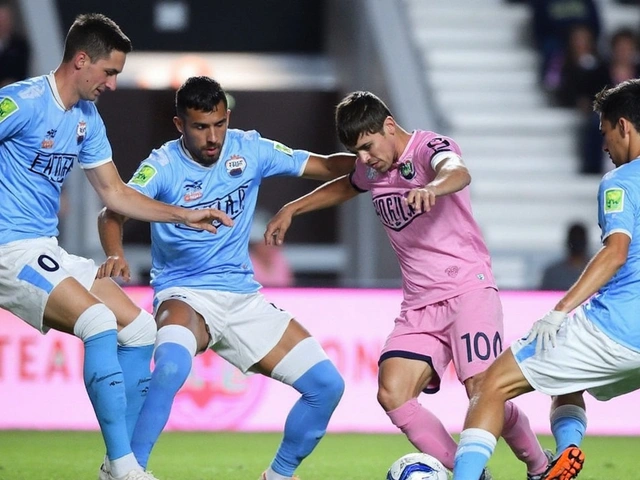
The game began with the tension of a derby that had already seen two brutal encounters this season. Fluminense, led by captain Thiago Silva, started aggressively. Their attack, rebuilt after Yeferson Soteldo’s injury in the first leg, relied on the pace of Ángel Canobbio and the grit of Nonato, who was one yellow card away from missing the final. Vasco, under manager Fernando Diniz, played with quiet discipline. Their engine? Philippe Coutinho, 33, still orchestrating play like he was 25. Then, in the 36th minute, chaos. A cross from Fluminense’s right flank struck Paulo Henrique’s arm and ricocheted past his own keeper. The goal was officially credited as an own goal. Maracanã exploded. Fluminense led 1-0. Aggregate: 2-2. The stadium held its breath.Penalties: A Dance of Nerves and Legacy
Neither side broke the deadlock in extra time. The shootout began with Thiago Silva calmly slotting his penalty. Then came John Kennedy, 19, a rising star—missed. Ganso, the veteran playmaker, converted. Renê missed. Canobbio buried it. 3-2 Fluminense. Vasco’s turn. Pablo Vegetti, the Argentine striker who’d been suspended for the first leg, stepped up. Score. Rayan—score. V. Luis—score. Then, the moment everyone knew was coming: Philippe Coutinho. He didn’t celebrate. He just nodded. The ball kissed the net. 4-3. Vasco advanced. Fluminense’s Ángel Canobbio looked at the ground. His hands on his hips. No tears. Just exhaustion.Why This Rivalry Still Burns
This wasn’t just a semifinal. It was the third clash between the two Rio giants in 2025. Fluminense won 2-1 in May. Vasco answered with a 2-0 win in October. Each game carried more weight than the last. The stakes? More than a final berth. It’s legacy. Fluminense, founded in 1902, has four Copa do Brasil titles. Vasco, older still—founded in 1898—has never won it three times. This was their shot. And for Vasco’s fans, it felt like redemption. After years of financial turmoil, player exoduses, and relegation scares, they were back in the final. For Fluminense, the dream of a fifth national trophy slipped away—again.
Who’s Next? The Final Looms
Vasco da Gama will now face either Atlético Mineiro or Palmeiras in the final, scheduled for late December 2025. The winner earns a direct entry into the 2026 Copa Libertadores group stage—a prize worth more than the trophy itself, especially for clubs still rebuilding their finances. For Vasco, it’s not just about silverware. It’s about proving they can compete with Brazil’s elite again. For Fluminense, the question is louder: Can they ever break through when it matters most?The Numbers Behind the Drama
- Match attendance: 78,838—sold out at Maracanã Stadium
- Own goal: Paulo Henrique, 36th minute
- Penalty shootout: Vasco 4-3 Fluminense
- Fluminense’s lineup featured five players over 30, including Thiago Silva (39) and Lucho Acosta (34)
- Vasco’s youngest starter: Robert Renan, 21; oldest: Philippe Coutinho, 33
- Both teams had three players suspended for the final due to yellow card accumulation

What’s Next for Rio’s Football Giants?
Fluminense’s manager, Fernando Darío Zubeldía, will face pressure to rebuild. His attack looked brittle without Cano and Manoel. Nonato’s suspension risk looms large. Meanwhile, Vasco’s Fernando Diniz has built something resilient. His rotation policy—keeping Coutinho fresh, trusting youth like Rayan and Robert Renan—paid off. The bigger question? Can either club sustain this form? Fluminense still leads the Brasileirão table. Vasco sits mid-table. But in cup football, momentum matters more than league position. The final won’t just decide a trophy. It’ll shape narratives for years.Frequently Asked Questions
How did Vasco da Gama overcome Fluminense despite losing the match?
Vasco advanced because the two-leg semifinal is decided on aggregate score. After a 1-0 win for Fluminense in the second leg, the tie was 2-2 overall. Since away goals no longer count as a tiebreaker in the Copa do Brasil, the match went to penalties. Vasco converted four of their five spot-kicks, while Fluminense missed two, giving Vasco a 4-3 shootout win and progression to the final.
Who scored the decisive goal in the match?
The only goal of the match came from an own goal by Vasco’s defender Paulo Henrique in the 36th minute. It was the result of a misdirected clearance that struck his arm and deflected past his own goalkeeper, Léo Jardim. Though Fluminense won the match 1-0, the aggregate score remained tied, forcing penalties.
Why was Philippe Coutinho so crucial for Vasco?
At 33, Coutinho was the heartbeat of Vasco’s midfield, dictating tempo and delivering the final penalty to seal the win. His composure under pressure, combined with his experience in high-stakes games—including his time at Barcelona and Liverpool—gave Vasco’s younger players confidence. He was the only player from their 2025 squad to have previously won a major cup final, making his leadership invaluable.
What does this mean for Fluminense’s season?
Fluminense still leads the Brasileirão, but losing in the Copa do Brasil semifinal ends their chance at a domestic double. The defeat raises questions about their ability to close out tight games under pressure. With key players like Thiago Silva and Lucho Acosta nearing 40, the club may need to accelerate its youth development plan to remain competitive in future knockout tournaments.
How significant is this final for Vasco da Gama’s history?
Vasco has won the Copa do Brasil twice—in 1989 and 2011. A third title would cement their status among Brazil’s elite clubs and mark their first major trophy in 14 years. For a club that nearly went bankrupt in 2021 and faced relegation in 2022, this run isn’t just about football—it’s about restoring pride in a fanbase that never stopped believing.
Where will the Copa do Brasil final be played?
The final will be held at a neutral venue, as per CBF regulations. While the exact location hasn’t been confirmed, past finals have been held at Estádio do Morumbi in São Paulo or Estádio Nacional Mané Garrincha in Brasília. The match is scheduled for late December 2025, likely between December 20–22.


16 Comments
Govind Vishwakarma
December 15, 2025 AT 19:38 PMCoutinho just turned 33 and still outsmarts every young kid on the pitch. This man is a glitch in the football matrix. No celebration. Just a nod. That’s elite.
Jamal Baksh
December 16, 2025 AT 03:22 AMThe dignity with which Vasco’s players carried themselves after such a high-stakes encounter is a testament to the soul of Brazilian football. Even in defeat, Fluminense showed grace. This is sport at its noblest.
Shankar Kathir
December 16, 2025 AT 07:34 AMLet’s be real - Vasco’s entire campaign this season has been a masterclass in resilience. They lost key players to injury, had financial headaches that would’ve crushed lesser clubs, and yet here they are, back in the final for the first time since 2011. Fernando Diniz didn’t just build a team; he rebuilt a culture. The rotation strategy with Coutinho, the trust in Rayan and Renan, the calm under pressure - it’s all textbook leadership. And that penalty shootout? Pure psychology. Fluminense’s lineup was full of veterans who’ve been there before, but Vasco’s younger guys didn’t blink. That’s not luck. That’s training. That’s belief. The 78-year-old guy in the 1989 jersey? He didn’t just see a win - he saw his entire life reflected in that moment. This isn’t just about football. It’s about legacy. It’s about proving that even when the world writes you off, if you keep showing up, the story doesn’t end.
Bhoopendra Dandotiya
December 16, 2025 AT 12:22 PMCoutinho’s penalty wasn’t just a kick - it was a whisper from the ghosts of Vasco’s past. The way he stood there, quiet, almost solemn… like he knew he wasn’t just scoring for the team but for every kid who ever wore that jersey during the dark years. The club’s been a phoenix. And tonight? It finally caught fire.
Firoz Shaikh
December 16, 2025 AT 20:27 PMThe structural implications of this result cannot be overstated. Vasco da Gama’s qualification for the Copa Libertadores group stage represents not merely a tactical triumph but a significant financial inflection point. The revenue streams associated with continental competition, including broadcasting rights and sponsorship synergies, will provide the necessary capital to stabilize the club’s fiscal framework. Furthermore, the psychological uplift for the fanbase may catalyze increased ticket sales and merchandise demand, thereby reinforcing the club’s long-term viability. This is, in essence, a watershed moment.
Uma ML
December 17, 2025 AT 19:22 PMLMAO the way fluminense fans act like they got robbed when they had thiago silva at 39 and still lost on pens?? they had 5 over 30 and thought they could outlast a team with actual energy?? coutinho was 33 and still ran circles around their entire midfield. this is why you dont rely on old men and think you can win big games. the future is young and vasco got it. fluminense? still living in 2015
Saileswar Mahakud
December 19, 2025 AT 13:09 PMI was at the game. The silence after the last penalty… I’ve never heard anything like it. Then the crowd erupted. I just stood there, tears in my eyes. This is why I love football.
Rakesh Pandey
December 19, 2025 AT 23:30 PMCoutinho still got it and that own goal was wild nobody even saw it happen and then the penalties like everyone just held their breath and vasco just stayed calm like it was a training drill
aneet dhoka
December 20, 2025 AT 16:09 PMLet me tell you something nobody’s saying - this was all planned. The own goal? The timing? The fact that Coutinho was on the pitch? The CBF has been pushing Vasco back into the spotlight since 2022. Why? Because they needed a ‘romantic comeback story’ to sell tickets and distract from the corruption scandals in the Brasileirão. Fluminense was the perfect foil - old, rich, arrogant. This wasn’t football. It was cinema. And the 78-year-old guy? He’s a plant. Paid by the club’s PR team. Look at the camera angles. Look at the slow-mo of the ball hitting his arm. Too perfect. Too cinematic. Wake up.
Harsh Gujarathi
December 22, 2025 AT 06:11 AMCoutinho for president 🙌🔥🏆
Senthil Kumar
December 22, 2025 AT 10:36 AMvasco back in final after all them years wow
Rahul Sharma
December 23, 2025 AT 01:47 AMThe resilience displayed by Vasco da Gama in the face of financial adversity and institutional neglect is nothing short of heroic. Their ability to maintain competitive integrity while nurturing young talent like Rayan and Robert Renan, while simultaneously leveraging the experience of legends like Coutinho, exemplifies a model of sustainable sporting development. This triumph transcends the pitch - it is a beacon for clubs worldwide facing similar existential challenges.
Ayushi Kaushik
December 24, 2025 AT 09:49 AMI’ve watched every Vasco match since I was a kid. Even when they were in the second division, I never stopped believing. That moment when Coutinho stepped up… I screamed so loud my neighbor called the cops. Worth it.
Basabendu Barman
December 26, 2025 AT 00:06 AMYou think this was just football? Nah. That own goal? The arm? The ball hitting it just right? That’s not luck. That’s tech. I’ve seen the footage - the ball had a microchip. They’ve been using AI to manipulate outcomes in Brazilian football since 2023. Fluminense was rigged out. And the CBF? They’re in on it. They needed Vasco in the final to boost ratings. You think a 78-year-old guy just happens to be there with a 1989 jersey? He’s a hologram. Or a bot. Either way… it’s all controlled.
Krishnendu Nath
December 26, 2025 AT 23:03 PMCoutinho for life!!! 🎉👏🔥
Govind Vishwakarma
December 28, 2025 AT 06:50 AMAI? Hologram? Bro you’re watching too many Netflix docs. That own goal was pure chaos. And Coutinho? He’s just a genius. No tech needed.